
My work begins with an impression, but rarely begins with a definitive story.
The figures I paint aren't intended to represent one person or one moment. They're simplified, expressive forms - reduced to their essence so they can hold emotion without dictating exactly what that emotion should be. By stripping away unnecessary detail, I hope to create space for the viewer to bring something of themselves to the work.
I'm less interested in telling people what to feel than in inviting them to pause and notice what they already feel.
A painting that speaks of solitude to one person might suggest new directions to another. A quiet gesture, a turned head, or the tension between two figures can carry entirely different meanings depending on who is looking. That's a big part of what I love about figurative art: even when the subject is recognisable, the experience remains deeply personal.
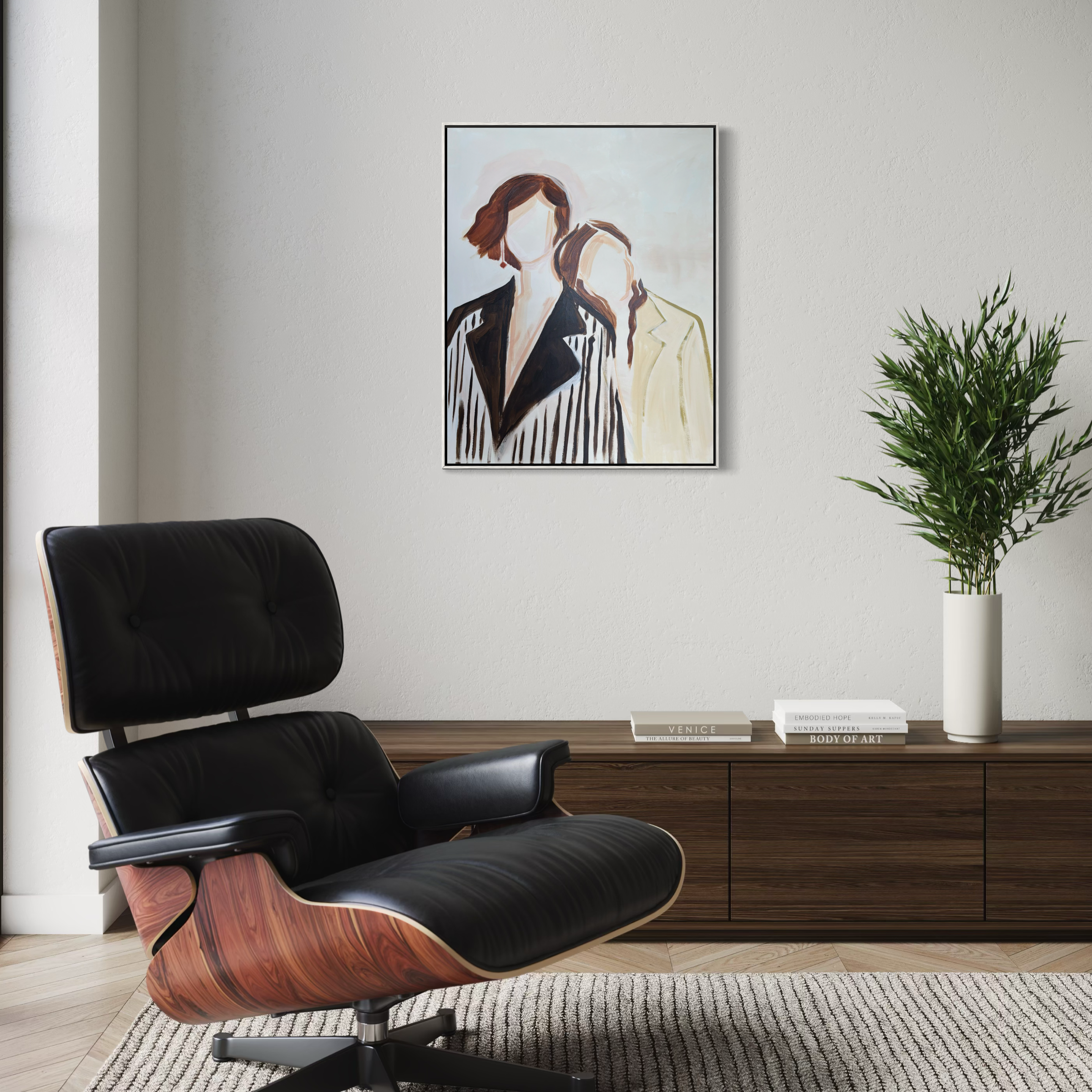
Shop Take a Breath
Minimalism, for me, isn't about absence. It's about intention. Every mark, every layer, and every area of empty space has a purpose. By saying less, the work has room to say more.
I don't believe a painting needs a single interpretation to be successful. If a piece encourages someone to slow down, reflect, or connect with an emotion they can't quite put into words, then it has already found its meaning - even if that meaning is different for every viewer.
Perhaps that's the beauty of art. It doesn't ask us to agree. It simply asks us to look.
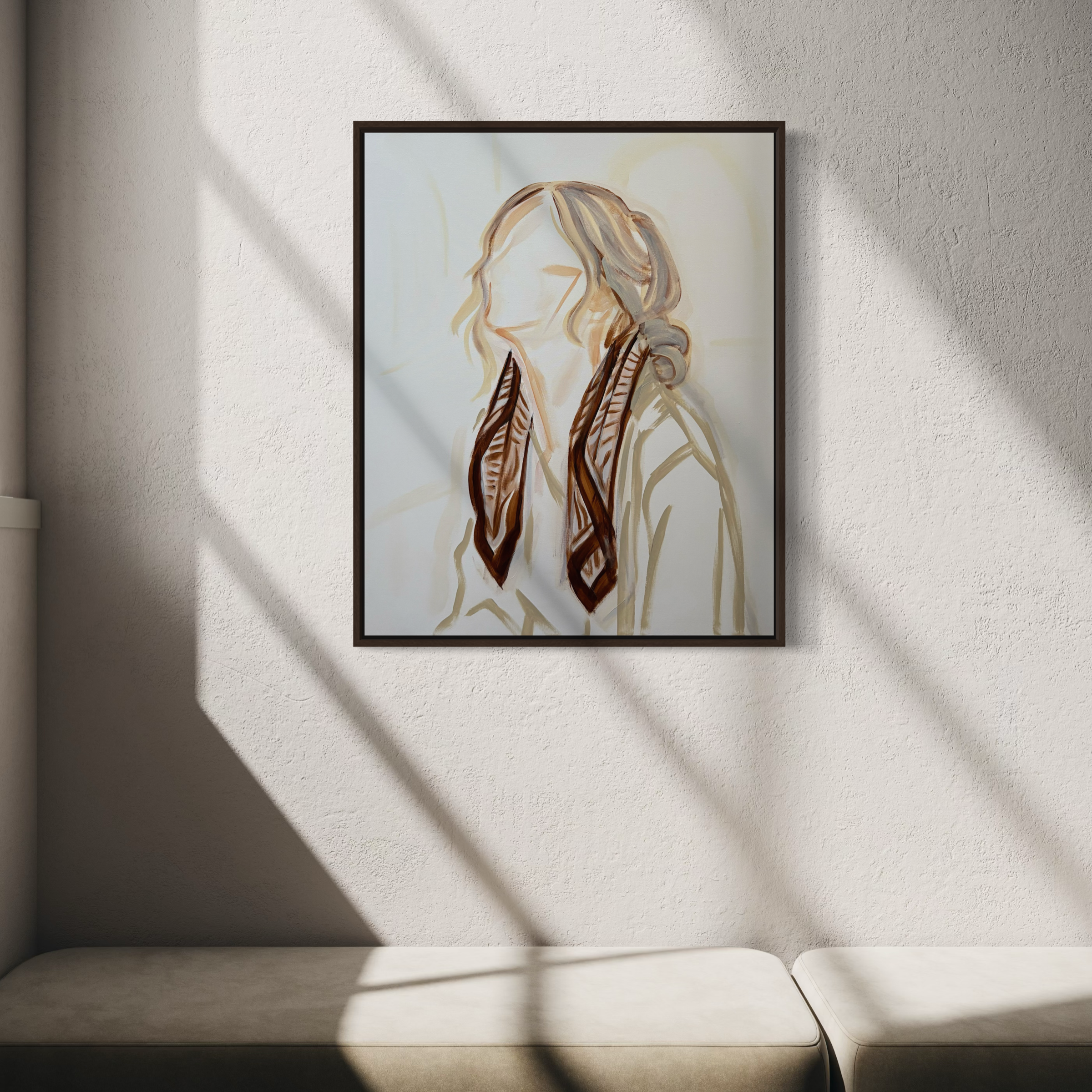
Shop Within Reach